
Why Business Transformations Fail: The Alignment Gap
Aligning Purpose, People, Processes, and Technology creates sustainable Operational Excellence.
Omar Malik
Reading Time: 8 minutes
Every organization is transforming. Whether driven by digital technologies, artificial intelligence, regulatory change, customer expectations, or cost pressures, transformation has become a business necessity rather than a strategic choice.
Yet despite billions of dollars invested annually in transformation initiatives, most organizations struggle to realize sustainable results. The problem is rarely the technology itself. More often, organizations fail because strategy, people, processes, governance, and technology are not aligned and evolve at different speeds.
Successful transformation is therefore less about implementing new systems and more about creating organizational alignment.
BUSINESS TRANSFORMATION FAILURE RATES

Less than one-third of organizational transformations achieve sustained success
Source: McKinsey & Company

88% of business transformations fail to achieve their original ambitions
Source: Bain & Company

70% of digital transformation programs do not reach their targets
Source: McKinsey

16% of digital transformations improve performance and sustain results over time.
Source: McKinsey & Company Global Survey
More than 70% of companies fail to outperform their industry following transformation efforts
Source: BGG Global

Successful organizations realize approximately 67% of potential transformation value
Source: McKinsey & Company
Figure 1: Business Transformation Failure Statistics
Transformations do not fail because of Technology — but because organizations underestimate the human, cultural, and leadership work required.
TECHNOLOGY ALONE DOESN'T TRANSFORM ORGANIZATIONS
Organizations are investing heavily in AI, Robotic Process Automation, cloud platforms, analytics, process mining, and low‑code tools. Yet technology only automates what already exists. When inefficient processes are automated, organizations simply become more efficient at producing waste.
High‑performing organizations follow a disciplined sequence:
- Optimize workflows and value streams
- Define ownership and accountability
- Standardize processes and improve data quality
- Then automate and digitize
This principle is foundational in Lean thinking and remains equally relevant in AI‑enabled enterprises.
eureka's insight
SEVEN EARLY WARNING SIGNS YOUR TRANSFORMATION IS OFF-TRACK
KEY ALIGNMENT CHALLENGES
1-Purpose Misalignment
Transformations without a clear, credible purpose often result in stakeholder cynicism and employee disengagement. When the "why" is ambiguous or inauthentic, momentum and trust erode quickly.
2.People and Culture Resistance
Siloed mindsets, insufficient training, and resistance to change are major barriers. Employees may fear job loss or feel excluded from the process, leading to low adoption and a blame culture. Leadership complacency and lack of cross-functional collaboration further impede alignment.
3- Process Blind Spots
Many organizations attempt to "bolt on" change without understanding or improving their current processes. This leads to rework, delays, and late-stage changes that undermine results.
4- Technology-First Integration Gaps
Implementing technology without aligning it to optimized processes and people can magnify inefficiencies. Technology managed in silos or used to automate unstable processes often results in poor ROI and operational friction.
5- Weak Leadership and Governance
Lack of visible leadership commitment, poor change management, and absence of structured governance cause initiatives to stall or fragment.
6- Customer and Market Disconnect
Failing to translate the voice of the customer (VOC) into transformation efforts leads to lost customers, higher service costs, and missed market opportunities.
7- The Role of Market and Customer Needs
Market and customer fit is a critical, often overlooked, factor in transformation success. Organizations that fail to sense and respond to changing customer needs or market dynamics risk irrelevance, even if internal projects are executed well.
8- Examples and Evidence
A- Banking Case: First-pass yield on key processes ranged between 70–85%, with manual controls and fragmented metrics. Departments blamed each other, and improvement lacked ownership.
B-Toyota Experience: Firms copying Toyota tools without aligning culture and roles saw high failure rates. Technology was only successful when integrated with people and process improvements.
C- Tech in a Silo: Organizations that manage technology separately from business systems struggle to reinvent themselves and achieve sustainable change.
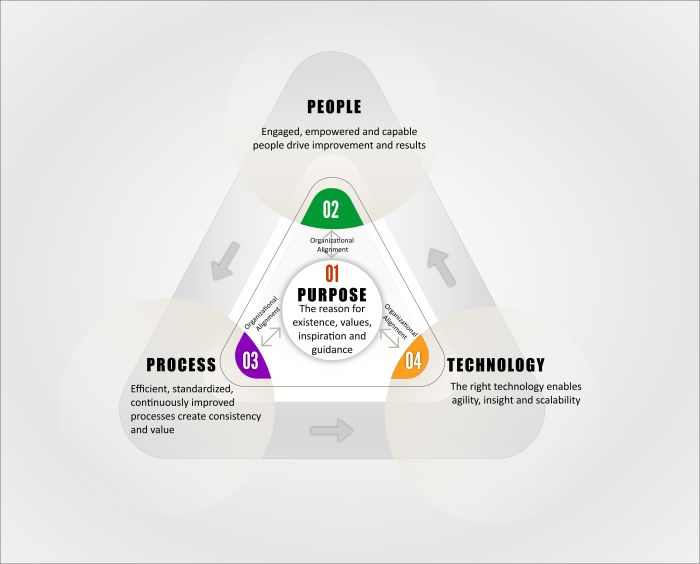
Figure 2: The Eureka Operational Excellence Framework™: Aligning Purpose, People, Process, and Technology to Deliver Sustainable Results
THE FOUR OPERATIONAL EXCELLENCE DIMENSIONS: PURPOSE, PEOPLE, PROCESS AND TECHNOLOGY
1-Purpose: The unifying anchor that provides direction and meaning for all transformation efforts.
2-People: The drivers of engagement, change, and learning. Empowerment, training, and a culture of continuous improvement are essential.
3- Process: The engine of value creation. Continuous improvement and standardization enable efficiency and adaptability.
4- Technology: The enabler of agility, integration, and data-driven decision-making. Technology should support and enhance people and processes, not replace them.
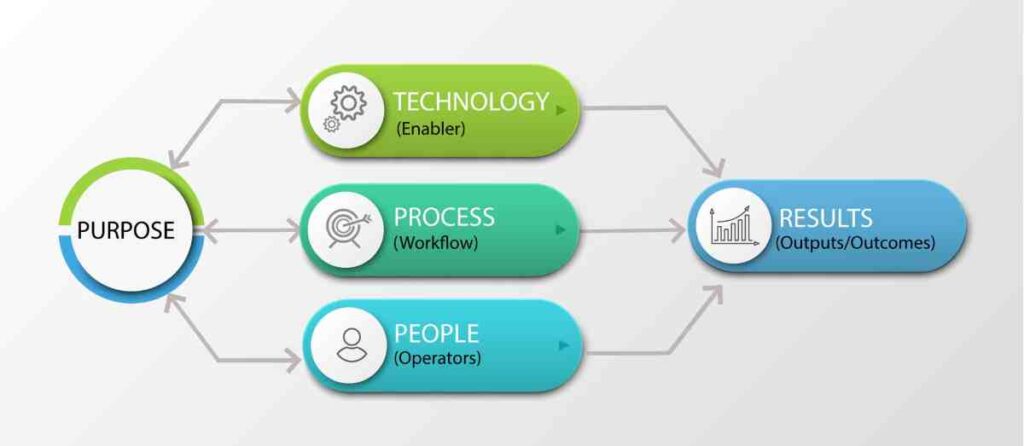
Figure 3: The Eureka Operational Excellence Framework™ Pillars & Business Results
Applying The Eureka Operational Excellence Framework™ with three simple steps:
ASSESS
Evaluate alignment across Purpose, People, Processes, and Technology.
ALIGN
Address gaps before launching major improvement initiatives.
ACCELERATE
Deploy Continuous Improvement and digital transformation once organizational alignment has been established.
FROM ALIGNMENT CHALLENGES TO ORGANIZATIONAL CAPABILITY
Understanding the causes of transformation failure is only the first step. Organizations must then translate these insights into a structured approach for building enterprise-wide capability.
The Eureka Operational Excellence Framework™ provides that foundation by shifting the conversation from isolated improvement initiatives to organizational alignment. Rather than asking, "Which process should we improve next?" leaders should begin by assessing whether the organization is aligned across its four critical dimensions: Purpose, People, Processes, and Technology.
This shift changes improvement from a series of disconnected projects into a coordinated business transformation strategy.
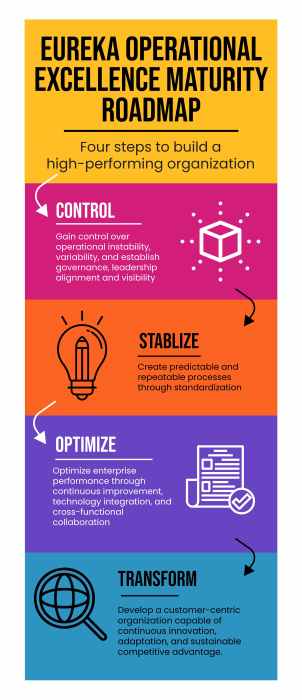
BUILDING ORGANIZATIONAL ALIGNMENT: WHERE TO BEGIN
Organizations seeking to improve transformation success should consider the following priorities:
FINAL THOUGHTS
Technology is reshaping every industry, but technology alone has never transformed an organization. Organizations that align purpose, people, process, and technology around a share vision of customer value have a better change to survive long-term and be more profitable. Companies that link transformation to customer and market needs—achieve higher rates of sustained improvement and market performance.
Transformation succeeds when organizations stop viewing technology as the destination and start treating it as an enabler of business excellence.
Leadership plays a central role in championing alignment, communicating vision, and fostering a culture of continuous learning and adaptation.
CONCLUSION
Organizations that consistently outperform their competitors are those that align purpose, strategy, people, processes, governance, and technology around a shared vision of customer value.
At Eureka Six Sigma, we believe Operational Excellence begins with alignment. When people, processes, technology, and leadership move together, organizations achieve sustainable transformation.
REFERENCES
1-Kotter, J. P. (May-June 1995). Leading Change: Why Transformation Efforts Fail. Harvard Business Review.
2-Pratt, M. G., & Hedden, L. N. (March 2023). Accounts and Accountability: On Organizational Purpose, Organizational Identity, and Meaningful Work. Strategy Science. [EBSCO-Full Text]
3-Carvalho, A. M., Sampaio, P., Rebentisch, E., Carvalho, J. Á., & Saraiva, P. (2019). Operational excellence, organizational culture and agility: the missing link? Total Quality Management & Business Excellence, 30(13–14), [1495–1514]
4-Sunder, M. & Kevin Linderman (2024). Explicating the microfoundations of operational excellence in services. Journal of Operations Management. [Journal of Ops Management – 2024 – Sunder]
5-Martin, J. W. (2021). Operational Excellence: Breakthrough Strategies For Improving Customer Experience And Productivity (2nd ed.). Taylor and Francis. [Pages 27-54]
6-Morgan, J., & Liker, J.K. (2006). The Toyota Product Development System: Integrating People, Process, and Technology (1st ed.). Productivity Press. [Pages 333-352]
7-Morgan, J., & Liker, J.K. (2006). The Toyota Product Development System: Integrating People, Process, and Technology (1st ed.). Productivity Press. [Pages 241-258]
8-PwC (2017). Asset & Wealth Management Revolution: Embracing Exponential Change.
9-Morgan, J., & Liker, J.K. (2006). The Toyota Product Development System: Integrating People, Process, and Technology (1st ed.). Productivity Press.[Pages 333-352]
10- Martin, J. W. (2021). Operational Excellence: Breakthrough Strategies For Improving Customer Experience And Productivity (2nd ed.). Taylor and Francis. [Pages 55-92]