
The Eureka Operational Excellence Maturity Roadmap™: A Strategic Roadmap for Building Sustainable & High Performing Organizations
From Operational Control to Organizational Excellence.
Omar Malik
Reading Time: 7 minutes
Operational Excellence is not achieved through isolated improvement projects, technology investments, or Lean initiatives alone. It is the result of progressively building organizational capability.
The Eureka Operational Excellence Maturity Roadmap™ presents a practical four-phase methodology that helps organizations evolve from operational control to sustainable business transformation. Each phase strengthens organizational maturity by improving leadership capability, aligning purpose and strategy, standardizing and optimizing processes, empowering people, integrating enabling technologies, and embedding a culture of continuous improvement.
Unlike traditional maturity models that focus primarily on operational performance, the Eureka Roadmap emphasizes enterprise-wide organizational capability, recognizing that sustainable Operational Excellence is achieved when purpose, people, processes, technology, governance, and leadership evolve together.
The ultimate outcome is a high-performing organization capable of continuously improving, adapting to change, and consistently delivering superior value to customers and stakeholders.
INTRODUCTION
Organizations invest billions of dollars every year in Lean Six Sigma, digital transformation, artificial intelligence, enterprise resource planning (ERP) systems, and operational improvement initiatives. Yet research consistently shows that most transformation efforts fail to achieve their intended outcomes. While organizations often attribute these failures to technology limitations, inadequate resources, or resistance to change, the underlying challenge is frequently a lack of organizational maturity.
Operational Excellence is not achieved by implementing isolated improvement projects or deploying new technologies. It is the result of progressively developing organizational capability. High-performing organizations do not become operationally excellent overnight; they evolve through a structured journey that strengthens leadership, aligns strategy, develops people, standardizes processes, and enables technology to create sustainable business value.
At Eureka Six Sigma, we believe Operational Excellence is not a destination but a continuous journey of organizational development. The Eureka Operational Excellence Maturity Roadmap™ provides a practical four-phase methodology that enables organizations to progressively strengthen their operational capability while aligning purpose, people, processes, and technology.
Unlike many maturity models that focus primarily on process improvement or Lean implementation, the Eureka Roadmap recognizes that sustainable Operational Excellence requires the simultaneous development of leadership, governance, culture, organizational capability, and customer value.
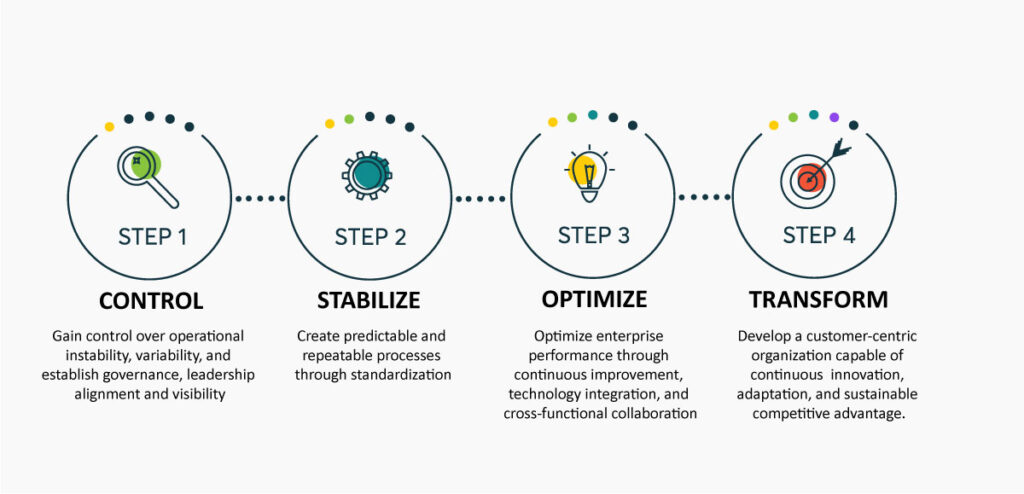
Figure 1: The Eureka Operational Excellence Maturity Roadmap™ stages.
WHY ORGANIZATIONAL MATURITY MATTERS?
Organizations often attempt to optimize operations before establishing control, standardization, and organizational alignment. This creates a cycle of fragmented initiatives, inconsistent execution, and poor adoption of change.
Technology accelerates existing capability—it does not create it.
Artificial intelligence, workflow automation, ERP platforms, and digital transformation initiatives can significantly improve performance, but only when they are deployed within stable, standardized, and well-governed operating environments.
The journey toward Operational Excellence therefore begins not with improvement, but with organizational maturity.
At Eureka Six Sigma, we believe Operational Excellence is not a destination but a continuous journey of organizational development. The Eureka Operational Excellence Maturity Roadmap™ provides a practical four-phase methodology that enables organizations to progressively strengthen their operational capability while aligning purpose, people, processes, and technology.
Unlike many maturity models that focus primarily on process improvement or Lean implementation, the Eureka Roadmap recognizes that sustainable Operational Excellence requires the simultaneous development of leadership, governance, culture, organizational capability, and customer value.
THE FIVE STAGES OF OPERATIONAL EXCELLENCE
STAGE 1- Control
Objective: Establishing Operational Foundation and Control
Every Operational Excellence journey begins by establishing control over organizational variability.
Organizations at this stage often operate reactively. Processes are inconsistent, performance varies significantly, governance is limited, and departments frequently work in isolation. Improvement efforts tend to focus on solving immediate problems rather than addressing systemic causes.
The objective of this phase is to gain visibility and control over operations by documenting critical processes, clarifying accountability, defining governance structures, reducing variability, and establishing performance measurement.
Leadership plays a highly directive role, ensuring operational discipline while building the foundation for future improvement.
Eureka's Insight # 1
Organizations cannot improve what they do not understand, measure, or control.
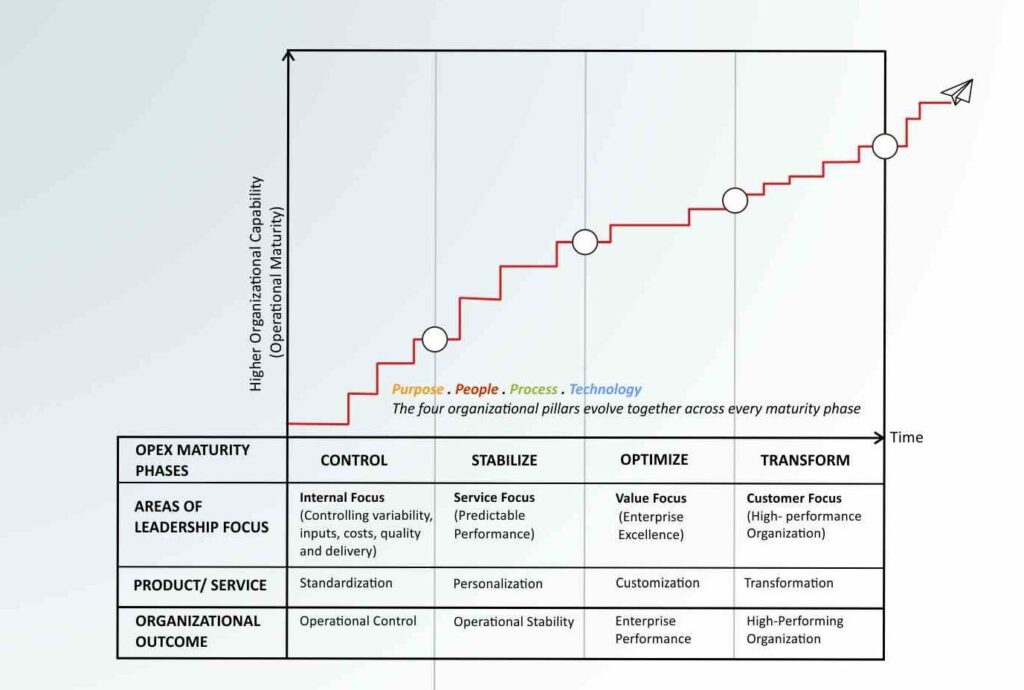
Figure 2: The Eureka Operational Excellence Maturity Roadmap™. The roadmap illustrates how organizations progressively develop organizational capability by advancing through four maturity phases i.e., Control, Stabilize, Optimize, and Transform. As leadership, people, processes, and technology mature together, organizations evolve from operational control to becoming high-performing, customer-centric enterprises capable of sustained innovation, resilience, and continuous improvement.
STAGE 2- Stabilize
Objective: Creating Operational Consistency
Once operational control has been established, organizations begin stabilizing their management systems.
Processes become standardized, standard operating procedures are implemented, performance indicators are established, and employees receive structured training. Improvement becomes increasingly systematic rather than reactive.
Leadership shifts from directing activities to coaching teams, while organizational culture begins moving away from firefighting toward proactive problem solving.
The primary objective of this phase is consistency.
Consistent processes produce predictable results, enabling organizations to improve quality, reduce variation, and increase customer confidence.
Eureka's Insight # 2
Standardization is not bureaucracy—it is the foundation upon which continuous improvement is built.
STAGE 3- Optimize
Objective: Maximizing Organizational Performance
Optimization represents the transition from process improvement to enterprise performance improvement.
Organizations begin integrating Lean Six Sigma methodologies, digital technologies, advanced analytics, automation, and cross-functional collaboration to optimize value streams rather than isolated departments.
Leadership increasingly focuses on removing organizational barriers, empowering teams, and aligning improvement initiatives with strategic priorities.
Technology becomes an enabler of performance rather than an isolated investment.
Artificial intelligence, robotic process automation, enterprise systems, and workflow automation are introduced only after processes have been standardized and organizational capability has matured.
The result is improved productivity, higher customer satisfaction, reduced operational costs, and faster decision-making.
Eureka's Insight # 3
Technology should accelerate Operational Excellence—not automate operational inefficiency.
STAGE 4- Transform
Objective: Building a High-Performing Organization
Transformation represents the highest level of organizational maturity.
Operational Excellence is no longer viewed as a project or program but becomes embedded within the organization's culture, leadership philosophy, and decision-making processes.
Employees continuously identify improvement opportunities, innovation becomes part of everyday work, and leaders focus on developing organizational capability rather than managing individual projects.
Processes continuously evolve to meet changing customer expectations, technology supports innovation, and continuous improvement becomes self-sustaining.
Organizations at this stage consistently demonstrate operational resilience, customer-centricity, enterprise agility, and sustainable competitive advantage.
Leadership transitions from directing operations to enabling organizational capability.
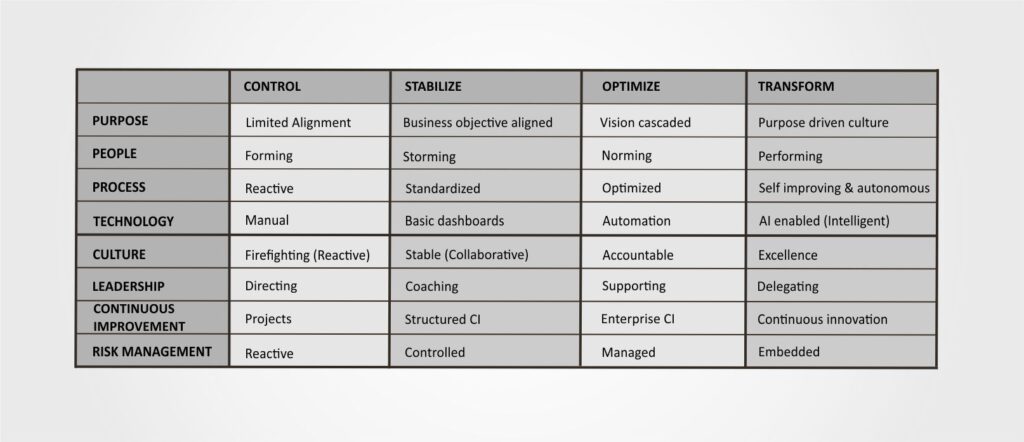
Figure 3: The Eureka Operational Excellence Maturity Assessment Table
Eureka's Insight # 4
Transformation is achieved when improvement becomes part of organizational culture rather than a management initiative.
The Outcome: A High-Performing Organization
Organizations that successfully progress through the Eureka Operational Excellence Maturity Roadmap™ develop far more than efficient processes.
They build an enterprise capable of continuously improving, adapting to change, and creating sustainable value.
High-performing organizations consistently demonstrate:
- Clear strategic alignment
- Empowered leadership and engaged employees
- Standardized and continuously improving processes
- Use of technology as a business enabler
- Strong governance and operational resilience
- Customer-centric decision-making
- Continuous innovation
- Sustainable competitive advantage
Operational Excellence becomes an organizational capability—not a collection of improvement projects.
Relationship to The Eureka Operational Excellence Framework™
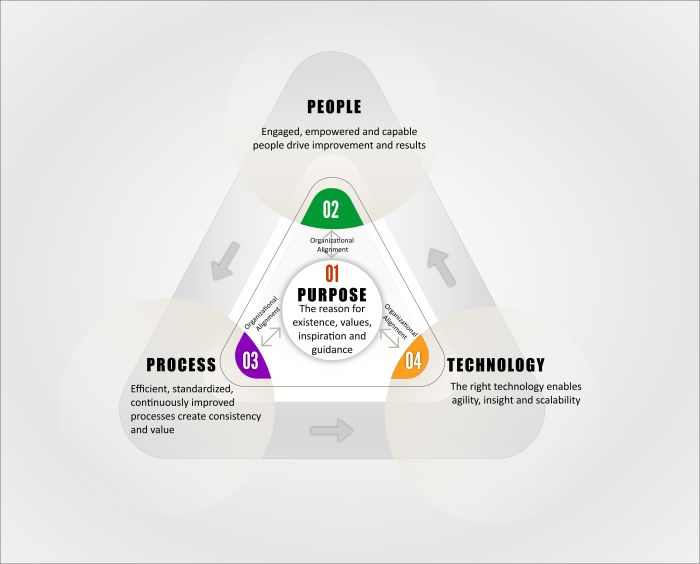
The Eureka Operational Excellence Framework™ defines the four organizational pillars that must be aligned—Purpose, People, Processes, and Technology.
The Eureka Operational Excellence Maturity Roadmap™ provides the implementation journey, illustrating how organizations progressively strengthen each of these pillars through the four maturity phases.
Together, the Framework and the Roadmap form an integrated methodology for achieving sustainable business transformation and Operational Excellence.
Eureka's Insight
Operational Excellence is not achieved through projects. It is achieved by building an organization capable of continuously improving, innovating, and creating sustainable value.
FINAL THOUGHTS
Operational Excellence is not built by implementing more improvement projects or deploying new technologies. It is developed by progressively strengthening organizational capability.
Organizations that rush toward optimization without first establishing control and stability often automate inefficiency rather than eliminate it. Sustainable transformation requires patience, discipline, leadership, and a structured progression toward maturity.
The Eureka Operational Excellence Maturity Roadmap™ provides organizations with that progression. It enables leaders to understand where they are today, identify the capabilities required for tomorrow, and build a practical roadmap toward long-term operational excellence.
At Eureka Six Sigma, we believe the journey from Control to Transformation is ultimately a journey from operational management to organizational excellence.